
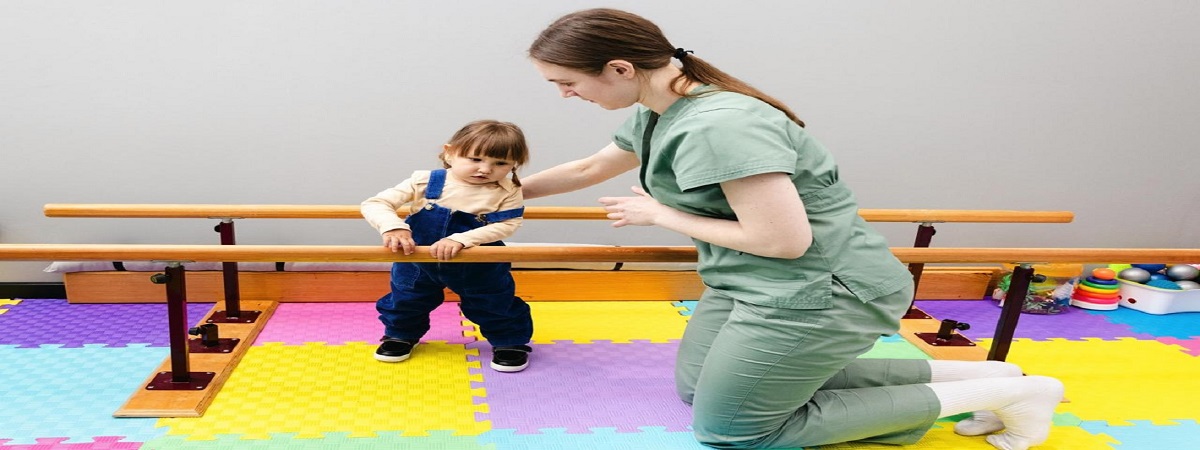
An occupational therapist has a crucial role in treating kids having sensory dysfunctions, in children having difficulty in doing activities of daily livings (ADL’S). Their role includes creating customized treatment plans, teaching new skills or methods for tasks, recommending adaptive equipment or environmental modifications, and educating caregivers to improve a client's ability to live independently and improve their overall quality of life. They enhance social participation of a child by ad

Our expert team provides occupational therapy in Delhi to help children improve motor skills, attention, and independence in a caring, child-friendly environment. Occupational therapist take all the concerns from care giver or teacher, identify child’s strengths and challenges, do comprehensive assessment, set goals and develop treatment plan to address physical, mental and social challenges.
Best Occupational Therapy Centre in Delhi for children offering personalized care to improve motor skills, sensory processing, and daily activities. Our expert therapists provide effective Occupational Therapy in Delhi with customized treatment plans to support child development, independence, and overall growth in a safe, child-friendly environment.
Occupational therapist plan sensory based, evidence based, play based & relationship based intervention method that child is centered and customized for successful engagement and participation.
Our Occupational therapists are well qualified and skilled in treating children having Autism, ADHD, DOWN’S Syndrome, Dyslexia, cerebral palsy, Erb’s palsy, Sensory dysfunctions, Learning disability and Cerebral Palsy etc.
They take playful measure to build good reputation with child where child can actively participate with therapist in various sensory motor activities.
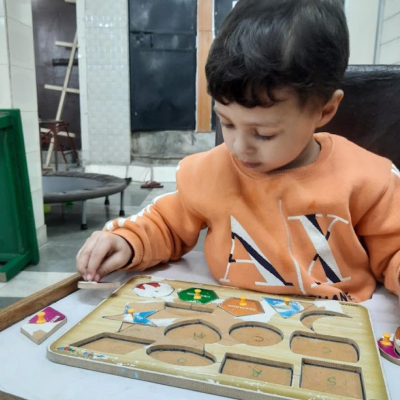
It is a condition where multisensory input not adequately processed in order to provide appropriate responses to the demands of the environment.
Now a days we are seeing variety of sensory problems in children of various conditions. Parents tell us that child is having Sitting issues, behavioral issues, child not responding to name, not listening properly or not following any command of parent, covering ears from loud sound, hitting or biting concerns, tactile issues, poor postural control, balancing concerns. Sometimes parents are not able to identify the symptoms they only say child is unable to speak later on when they go in detailed assessment we found that child has sensory issues also.
Sensory Integration is a process by which we sense the world around us. We use our sensory organs to receive information around us and on the other hand we organize it so we understand our surroundings and respond appropriately.
Any breakdown in sensory processing can affect:
Children having sensory processing disorder have there life quite miserable and they have difficulty in interacting with others , behavioural issues , communicational difficulty, poor peer group interaction, bad social behaviour, and dependent on others for various activities of daily livings(ADL'S).
SENSORY INTEGRATION THERAPY is one of the strategy or technique used by occupational therapist through fun and play based activities by exposing them to sensory stimulation in a structured and repetitive way by which they suppress the hyperresponsive(hyperactive) sensory area and dominate the hyporesponsive sensory area which needs more information.e.g. Normal child knows how to protect from danger if any child's tactile system is hyporesponsive child will not remove hand from any danger. If child is hyperresponsive then he or she may feel pain or discomfort while touching something sticky and shows behavioral issues.
Occupational therapy in OACDC works on various sensory programs.
Sensory Integration Therapy and Sensory Diet.
Role of Occupational Therapist in Autism
Autism spectrum disorder is neurodevelopment condition affecting social communication, interaction, behavior characterized by Severe deficiency in social knowledge, reciprocal social interaction, with repetitive patterns and restricted or limited interest in activities. There is abnormality in language and verbal communication. The patient speaks with inappropriate volume, pitch, stress, rate, rhythm & tone. Speech may be stereotyped, repetitive, idiosyncratic and echolalic.
Autistic kids face trouble in developing or maintaining friendship, relations or adjusting behaviors to different social settings. Autistic people also give unusual reactions to sensory inputs.
Benefits by Occupational Therapy
In Open Arms Child Development Centre sensory based techniques individually tailored and frequently monitored for success. Our therapists used multisensory approach in managing sensory issues in Autism or any other sensory disorder.
Sensory strategies introduced during 1:1 intervention sessions and observed and documented on monthly basis for success and appropriateness of fit.
We provide caregiver education and coaching to understand child in better way and to do required modifications in home or in society according to child need.
